Choosing the Right 3D Glasses for Lazy Eye Games
Lazy Eye Games rely on anaglyph 3D glasses to deliver separate visual information to each eye. Choosing the right pair is essential for effective color calibration and a comfortable training experience. This guide explains the different types of glasses available and which ones work best.
Why You Need 3D Glasses
The games use a technique called dichoptic presentation, where different game elements are displayed in different colors. When viewed through anaglyph glasses, each lens filters out specific colors, so each eye sees only its designated part of the game. This forces the brain to combine both inputs to perceive the complete scene.
Recommended Glasses
While most standard anaglyph glasses will work, higher-contrast (darker) lenses make color calibration much easier. Below are the top recommendations, ranked by ease of use:
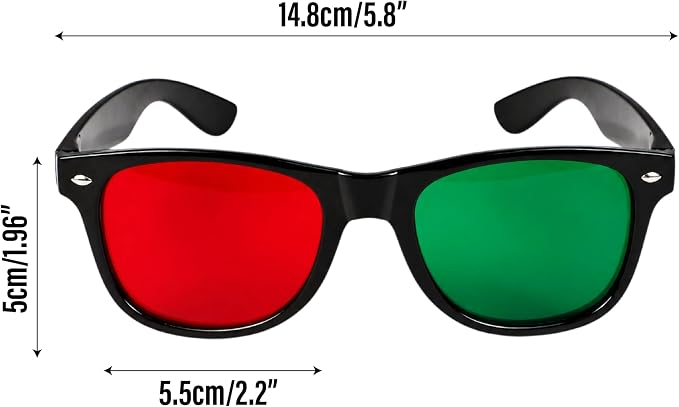
1. Red/Green Glasses for Vision Therapy
These high-contrast glasses offer excellent color separation and are comfortable for extended sessions. Their darker lenses make it straightforward to calibrate the in-game colors.
2. Red/Blue 3D Glasses
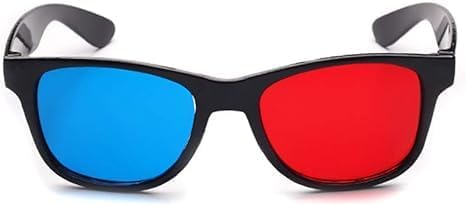
Red and blue lenses provide strong separation between the two color channels. Many users find this combination among the easiest to set up, especially on modern displays.
3. Magenta/Green 3D Glasses
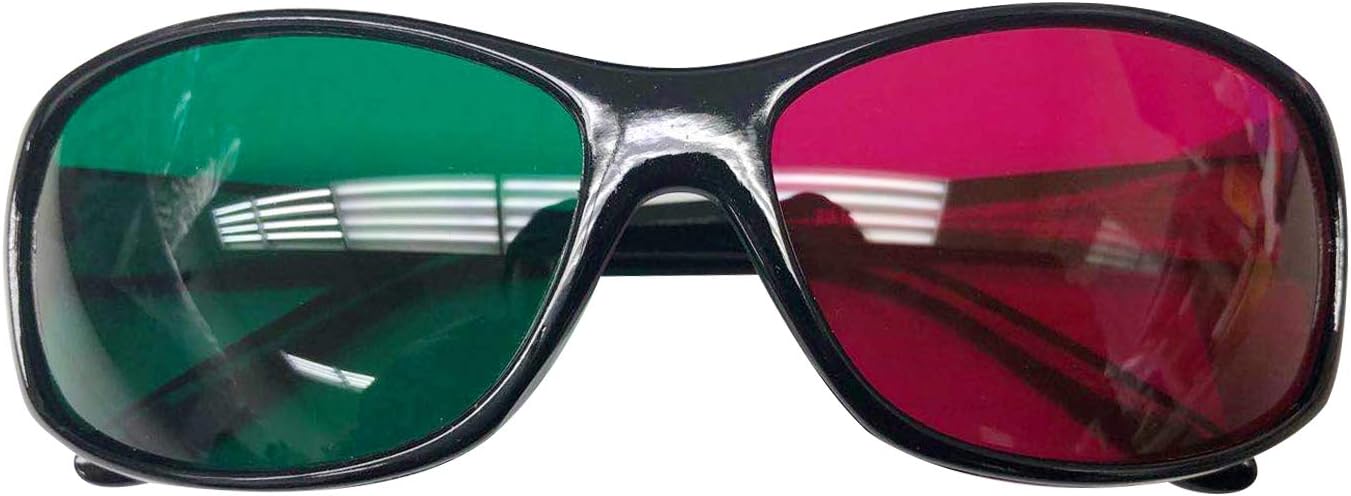
The most widely available type of anaglyph glasses. Magenta/green lenses work well and can be found at very low cost. They are a solid choice for getting started.
4. Professional Vision Therapy Glasses
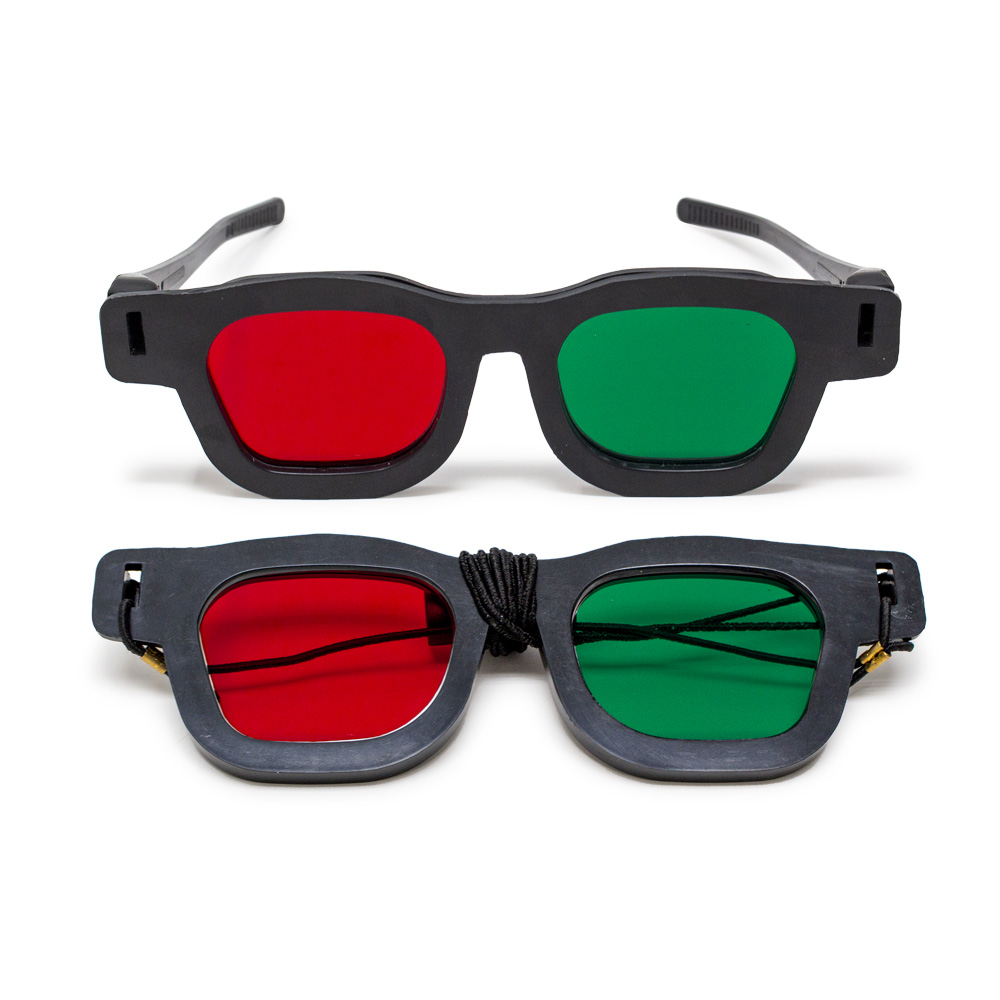
For those working with an optometrist or vision therapist, professional-grade red/green glasses from suppliers like Bernell offer the highest optical quality and most precise color separation.
Order from Bernell → (Available to Registered Healthcare Professionals, Schools, & Government)
Key Tips for Choosing Glasses
- Darker is better: High-contrast, darker-tinted lenses make it much easier to separate the two color channels during calibration. Pale or lightly tinted glasses require more precise settings.
- Red/green, Red/Blue and Magenta/Green are the easiest to calibrate: These combinations tend to produce the cleanest separation on most displays. Red/Cyan also works well in many cases, but could require more careful adjustment.
- If you wear prescription glasses: Choose anaglyph glasses large enough to fit over your regular frames, or look for clip-on options.
- Display type matters: AMOLED screens produce deeper blacks and more saturated colors than standard LCD panels, making color calibration more forgiving. If you have a choice, prefer AMOLED devices for mobile play.
3D Monitors and TVs
If you have a 3D-capable monitor or television, you can use the passive polarized glasses that came with your display (such as LG passive polarized glasses) instead of anaglyph glasses. The 3D version of Lazy Eye Blocks supports these displays and provides an even cleaner separation between the two eyes.